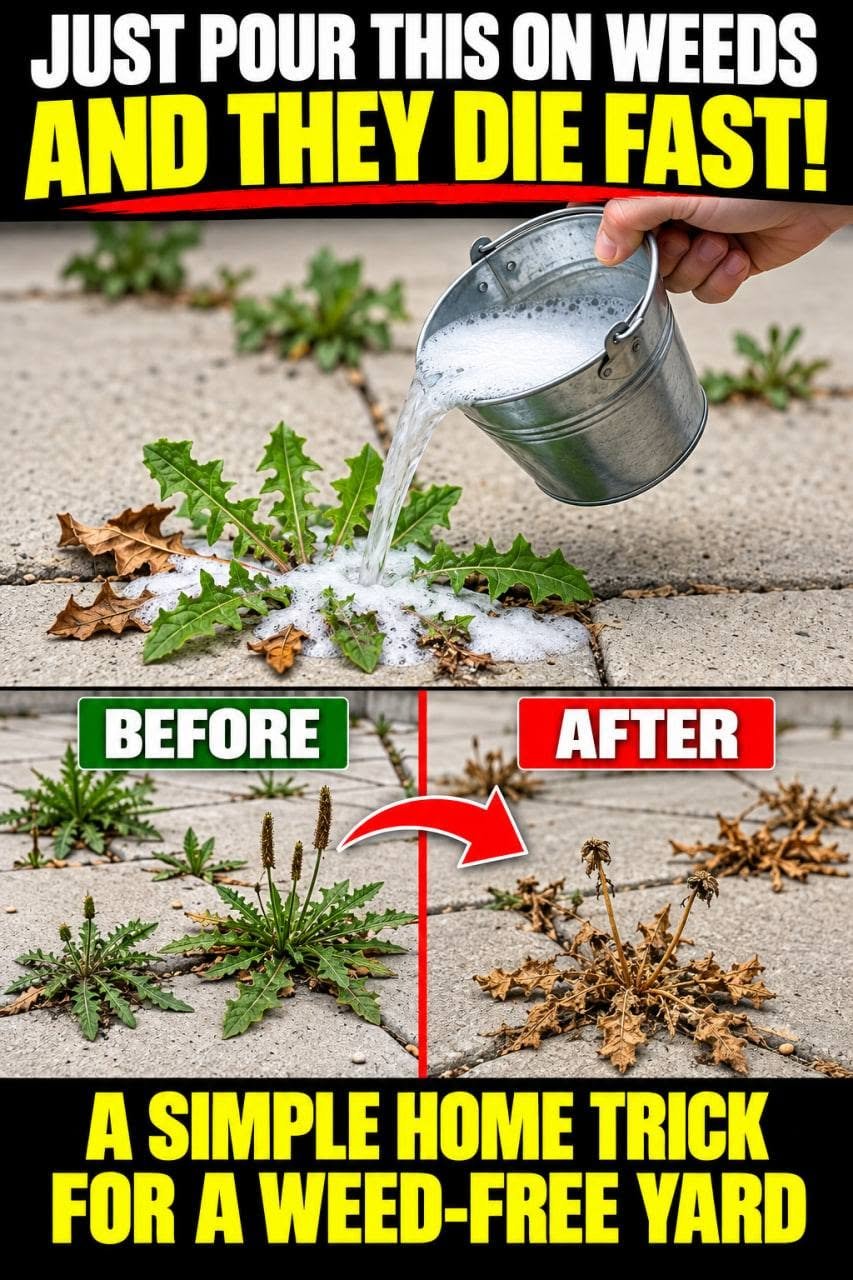
Weeds can quickly take over driveways, patios, gravel paths, garden edges, and other outdoor spaces. Many homeowners look for simple homemade solutions because commercial herbicides may be expensive or may not fit the way they want to manage their property.
A homemade mixture made with vinegar, salt, citric acid, and dish soap can damage and dry out unwanted plants. However, it is important to understand that this kind of mixture is not selective. It can injure almost any green plant it touches, and repeated use of salt can create long-lasting problems in soil.
Used carefully, this type of homemade weed spray can be useful for cracks in pavement, gravel areas, and other places where you do not want plants growing. It is much less suitable for lawns, vegetable gardens, flower beds, or areas where you may want to grow something later.
How Homemade Weed Sprays Work
The ingredients in a homemade weed-control mixture work mostly by damaging exposed plant tissue rather than by moving throughout the entire plant.
This means the leaves may wilt and dry rapidly, while the roots of established perennial weeds can sometimes survive underground and produce new growth later.
White Vinegar
White vinegar contains acetic acid. When sprayed directly onto leaves, acetic acid can damage the outer plant tissue and cause moisture loss.
Young weeds with tender leaves may respond quickly, especially in warm, dry weather. Larger or deeply rooted weeds are usually more difficult to eliminate completely.
Salt
Salt draws water away from plant tissues and can interfere with normal plant function.
It is also the ingredient that deserves the greatest caution.
Salt does not simply disappear after it has damaged a weed. It can accumulate in soil, interfere with water uptake by future plants, alter soil structure, and reduce the ability of desirable plants to grow in the area.
For this reason, salt-based weed sprays are best reserved for hard surfaces, gravel, and other areas where future planting is not planned.
Citric Acid
Citric acid can increase the acidity of the mixture and contribute to contact damage on green plant tissue.
Like vinegar, its effect is mostly on the parts of the weed that are actually coated by the spray.
Dish Soap
Dish soap acts mainly as a surfactant.
Plant leaves often have a waxy surface that causes water-based sprays to bead up and roll away. A small amount of soap helps the liquid spread more evenly and remain on the leaf surface longer.
Using too much soap is unnecessary and can increase the risk of damage to nearby plants or surfaces.
A Simple Homemade Weed-Control Mixture
The following mixture is based on the ingredients commonly used in this type of home treatment:
- 300 milliliters of water
- 1 tablespoon of citric acid
- 200 milliliters of plain white vinegar
- 1 tablespoon of table salt
- 1 tablespoon of liquid dish soap
- 1 additional liter of water
How to Prepare It
Start by placing the 300 milliliters of water in a suitable container.
Add the citric acid and salt, then stir until they dissolve as completely as possible.
Add the white vinegar and dish soap and mix gently. Avoid vigorous shaking because soap can create excessive foam.
Allow the mixture to sit if necessary so that any remaining crystals can dissolve.
If undissolved particles remain, strain the liquid before transferring it to a spray bottle. This can help prevent clogging.
Add the additional liter of water and mix gently again.
Where This Mixture Is Most Appropriate
Because it contains salt and acidic ingredients, this spray is better suited to areas where you do not want vegetation growing.
Examples include:
- Cracks in concrete
- Driveway edges
- Patio joints
- Gravel paths
- Some fence-line areas
- Other non-planted surfaces
Where You Should Avoid Using It
Do not treat this mixture as a general-purpose garden spray.
Avoid using it heavily in:
- Vegetable gardens
- Flower beds
- Lawns
- Around trees or shrubs
- Areas where roots of desirable plants may extend
- Places where you intend to plant later
The biggest mistake with homemade weed killers is not the recipe itself—it is using them in the wrong place.
NEXT PAGE