Why Salt Can Cause Long-Term Soil Damage
Salt is effective because it interferes with a plant’s ability to manage water. Unfortunately, that same effect can continue after the original weed is gone.
When salt enters soil, it can increase salinity around plant roots. High salinity makes it harder for roots to absorb water even when the soil appears moist.
Repeated applications can make the problem worse, particularly in areas with limited rainfall or poor drainage.
This is why using large quantities of salt in a garden bed can create a patch where even desirable plants struggle to survive later.
Does the Spray Kill the Roots?
Not always.
Contact weed sprays usually damage the visible leaves and stems first.
Annual weeds and very young seedlings may die completely after one treatment because they have limited root reserves.
Established perennial weeds are different.
Plants with deep roots, underground runners, bulbs, rhizomes, or large root systems may regrow even after the foliage has been badly damaged.
Repeated removal of new shoots can gradually weaken some stubborn weeds, but results vary depending on the plant.
Best Time to Apply a Contact Weed Spray
Warm, dry weather generally provides the best conditions.
A sunny day can speed up drying of treated leaves, making the visible effect happen more quickly.
Try to apply the mixture when rain is not expected soon afterward because rainfall can wash the spray away before it has had time to work.
Early morning after dew has dried or late morning can work well.
Avoid Windy Conditions
Wind can carry droplets onto grass, flowers, vegetables, or other plants you want to protect.
Because the mixture is non-selective, even a small amount of drift can cause spotting, browning, or leaf damage.
If there is noticeable wind, wait for calmer conditions.
Spray the Weed, Not the Ground
Aim directly at the leaves and stems.
There is usually little benefit in soaking the surrounding soil, and doing so increases the risk of salt accumulation.
A light, even coating is more appropriate than drenching the area.
How Quickly Will You See Results?
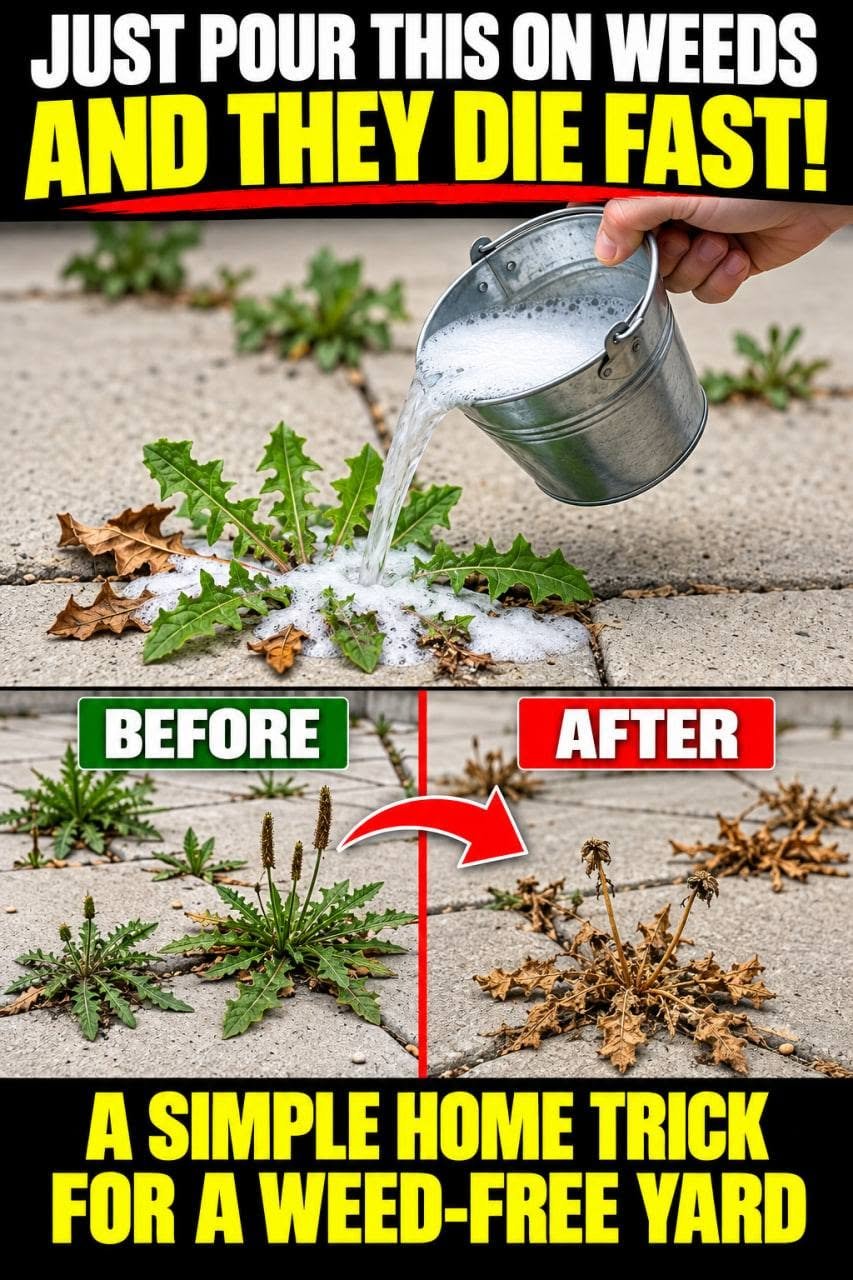
Small weeds may begin wilting within hours under hot, dry conditions.
More mature weeds may take longer.
The visible leaves may turn brown and collapse, but that does not necessarily mean the root system is dead.
Observe the area over the following days or weeks and remove or retreat new growth if necessary.
What About Vinegar Alone?
Vinegar alone can damage young weeds, particularly when applied directly to leaves on a sunny day.
Its effectiveness tends to be greater on small annual weeds than on mature perennial weeds.
Using vinegar without salt may be preferable in locations where you are trying to reduce the risk of long-term soil salinity.
What About Boiling Water?
Boiling water is another simple option for weeds growing in pavement cracks, along steps, or between pavers.
It damages plant tissue through heat and does not leave salt behind in the soil.
However, it is still non-selective and can injure any nearby plant roots it reaches.
There is also a burn risk, so it must be handled carefully.
Pulling Weeds Is Still Useful
Homemade sprays are convenient, but physical removal remains one of the most dependable options for many weeds.
Pulling is especially effective after rain or watering when the soil is soft.
Try to remove as much of the root as possible.
This is particularly important for perennial weeds that can regenerate from root fragments.
Mulch Can Prevent New Weeds
In garden beds, prevention is often more effective than repeated spraying.
A layer of mulch can reduce the amount of sunlight reaching weed seeds and make it harder for them to germinate.
Organic mulch may include wood chips, bark, shredded leaves, or other suitable materials.
Keeping mulch at an appropriate depth can significantly reduce routine weed pressure.
Landscape Fabric and Gravel Areas
In some non-planted areas, landscape fabric beneath gravel can slow weed emergence.
It is not a perfect solution because weed seeds can still blow onto the surface over time, but it can reduce growth from below.
Occasional hand pulling or spot treatment is usually still necessary.
Why Weeds Return
Weeds can return for several reasons:
The root survived the first treatment
New seeds germinated
Underground runners produced new shoots
Wind carried seeds into the area
Birds or animals introduced seeds
Soil disturbance exposed dormant seeds
This means that long-term weed control is usually a process rather than a one-time event.
Annual Weeds Versus Perennial Weeds
Annual weeds complete their life cycle within one growing season and are often easier to control while young.
Perennial weeds can survive for multiple years and commonly store energy underground.
This makes them much more likely to regrow after a contact spray damages the foliage.
Do Not Mix Random Cleaning Products
One important safety rule is to avoid combining weed-control ingredients with household cleaners unless you know the combination is safe.
Never add bleach, ammonia, or other strong cleaning chemicals to a homemade garden mixture.
Certain combinations can release dangerous fumes or cause harmful chemical reactions.
Protect Your Skin and Eyes
Even household ingredients can irritate skin and eyes when concentrated.
Wear gloves when mixing or spraying.
Avoid breathing mist from the spray bottle and do not spray toward your face.
Wash your hands after use.
Keep Pets and Children Away Until the Area Is Dry
Although the ingredients may be familiar household products, concentrated mixtures can still irritate skin, paws, eyes, or the digestive system.
Keep children and pets away while spraying and until treated surfaces have dried.
Protect Nearby Plants
If an unwanted weed is growing close to a valuable plant, spraying may not be the best choice.
Hand pulling, digging, or carefully cutting the weed may offer better control without risking accidental damage.
Do Not Assume “Natural” Means Harmless
Vinegar, salt, and citric acid may be familiar kitchen ingredients, but they can still damage plants, soil, surfaces, eyes, and skin when used in concentrated form.
Natural weed control should therefore be used with the same practical caution as other outdoor treatments.
A small amount applied precisely can be useful, while repeated heavy applications can create a bigger problem than the weeds themselves.
NEXT PAGE