When Salt-Free Methods Make More Sense
If the weeds are growing near a garden bed, tree, lawn, or future planting area, a salt-free method is generally a better choice.
Options include hand pulling, shallow cultivation, mulch, boiling water on hard surfaces, or careful spot treatment with vinegar alone.
How to Deal With Weeds in Driveway Cracks
Driveway cracks are one of the most suitable places for contact weed treatments because permanent plant growth is usually unwanted there.
For best results, remove large weeds first, then treat small regrowth.
Once the cracks are clean, repairing or sealing them can help reduce future weed establishment.
How to Control Weeds Between Patio Pavers
Weeds between pavers often grow from seeds that settle into accumulated dust and organic debris.
Pull visible weeds, sweep out loose material, and treat remaining small growth if needed.
Refreshing jointing material may also help reduce future germination.
How to Manage Gravel Paths
Gravel areas can gradually collect soil, leaves, and organic matter, creating ideal conditions for weeds.
Raking and removing accumulated debris can reduce new growth.
Spot treatment is preferable to soaking large sections unnecessarily.
What to Do If You Accidentally Spray a Desirable Plant
Rinse the leaves promptly with plenty of clean water.
The faster the mixture is diluted and washed away, the better the chance of reducing damage.
If salty solution entered the soil, additional watering may help dilute and move some of the salt away from the root zone, depending on soil drainage.
Can Rain Reverse Salt Damage?
Rainfall can gradually leach salt deeper into the soil or move it away from the treated area, particularly in well-drained soils.
However, repeated heavy applications can still cause persistent problems.
Prevention is much easier than trying to repair severely salt-damaged soil.
How Often Should You Reapply?
Do not automatically spray on a fixed schedule.
Wait to see whether the weed regrows.
If new leaves appear, another targeted treatment may be useful.
Repeated spraying of bare soil provides little benefit and increases the risk of unnecessary salt buildup.
Is More Vinegar Better?
Not necessarily.
Using increasingly concentrated acidic mixtures can raise the risk of skin irritation, eye injury, damage to nearby plants, and surface discoloration.
For routine home use, careful placement is more important than extreme concentration.
Will Dish Soap Kill Weeds by Itself?
Dish soap alone is not a dependable weed killer.
Its main role in the mixture is helping other ingredients spread and stick to the foliage.
Can This Mixture Harm Insects?
Direct exposure to concentrated sprays can affect small insects as well as plants.
Avoid spraying flowers, blooming weeds, or areas where bees and other pollinators are actively feeding.
Target only the unwanted plant.
How to Prevent Weeds Without Sprays
The most sustainable approach is often to make the area less favorable for weeds in the first place.
Useful strategies include:
Mulching garden beds
Maintaining dense healthy turf
Repairing pavement cracks
Removing weeds before they produce seeds
Cleaning organic debris from gravel and pavers
Using appropriate ground covers
Regular hand weeding when plants are small
Why Removing Weeds Before They Seed Matters
A single mature weed can sometimes produce a large number of seeds.
Allowing weeds to flower and set seed can create a much larger problem later.
Early removal is therefore one of the simplest and most effective long-term weed-control strategies.
Frequently Asked Questions
Is Homemade Weed Killer Safer Than Commercial Herbicide?
Not automatically.
Safety depends on the ingredients, concentration, application method, location, and exposure.
Homemade mixtures can still injure plants, damage soil, irritate skin and eyes, and affect surrounding organisms.
Does Vinegar Permanently Kill Weeds?
It may kill young annual weeds completely, but mature perennial weeds can often regrow from surviving roots.
Does Salt Permanently Kill Weeds?
Salt can create conditions in which plants struggle to grow, but that is exactly why it must be used cautiously.
Its effects can extend beyond the targeted weed and harm future vegetation.
Can I Use This Spray on My Lawn?
No. It can damage or kill grass along with the weeds.
Use a more selective approach for lawn weeds.
Can I Use It Around Trees?
Avoid using salt-based mixtures near tree root zones.
Tree roots can spread well beyond the visible canopy, and repeated salt exposure can harm them.
Can I Use It in a Vegetable Garden?
Salt-containing weed mixtures are not a good choice for productive garden soil.
Hand pulling, mulch, shallow cultivation, and other targeted methods are better options.
Can I Spray Before Rain?
It is generally better to choose a dry period so the mixture remains on the leaves long enough to act.
Can I Store Leftover Mixture?
If you store any homemade spray, keep it clearly labeled, tightly closed, and completely out of reach of children and pets.
Never store it in a beverage bottle or food container that could cause confusion.
Final Thoughts
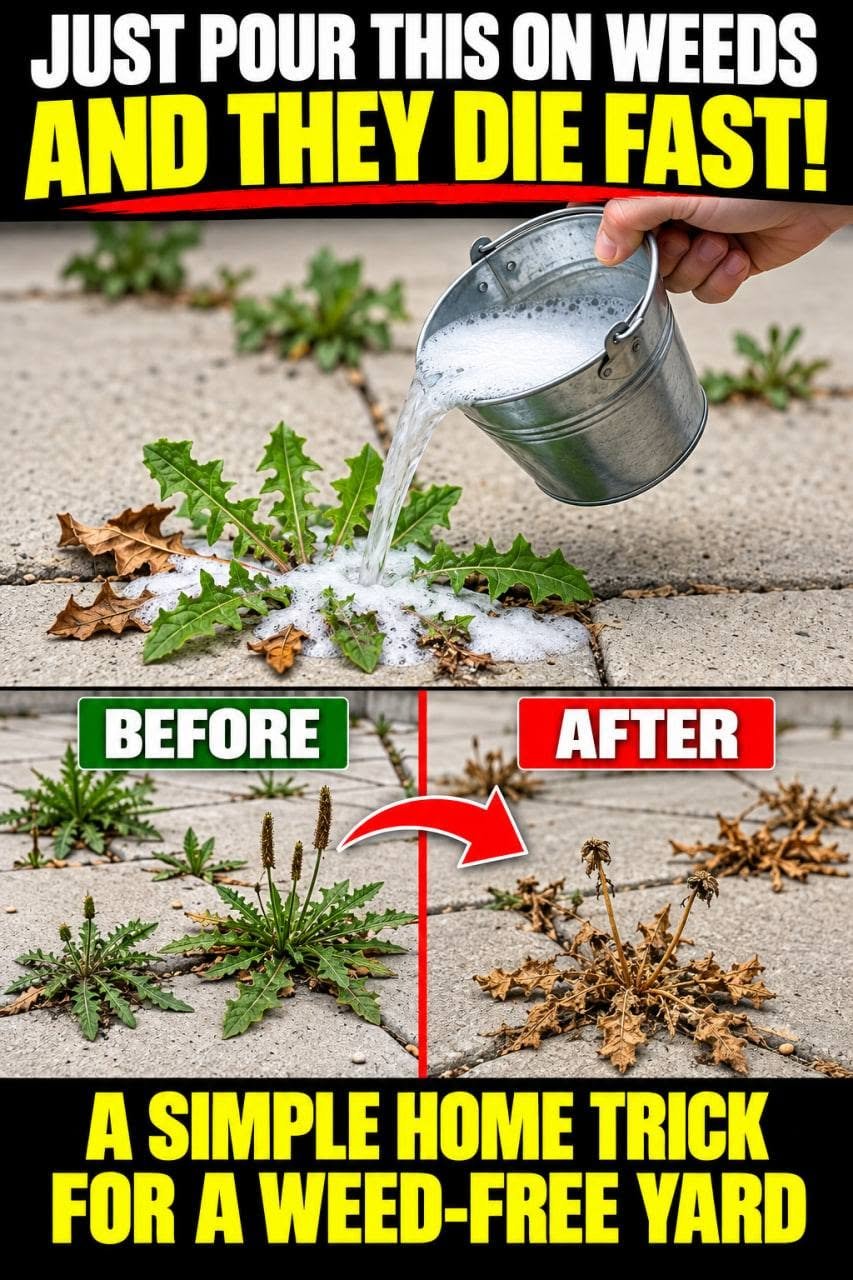
A homemade mixture of vinegar, citric acid, salt, and a small amount of dish soap can be useful for spot-treating weeds in places such as driveways, patio cracks, and gravel paths.
Its strength is also its main weakness: it is non-selective and can damage any plant it touches.
The salt deserves particular caution because repeated applications can reduce soil fertility and make future planting difficult.
For garden beds, lawns, areas near trees, or soil you want to keep productive, physical removal, mulch, and other salt-free methods are usually better choices.
The most effective long-term approach is to combine careful spot treatment with prevention: remove weeds before they seed, reduce the conditions that allow them to return, and avoid unnecessarily treating healthy soil.
Used precisely and sparingly, homemade weed control can be a practical addition to your outdoor maintenance routine without creating unnecessary damage to the rest of your property.
NEXT PAGE