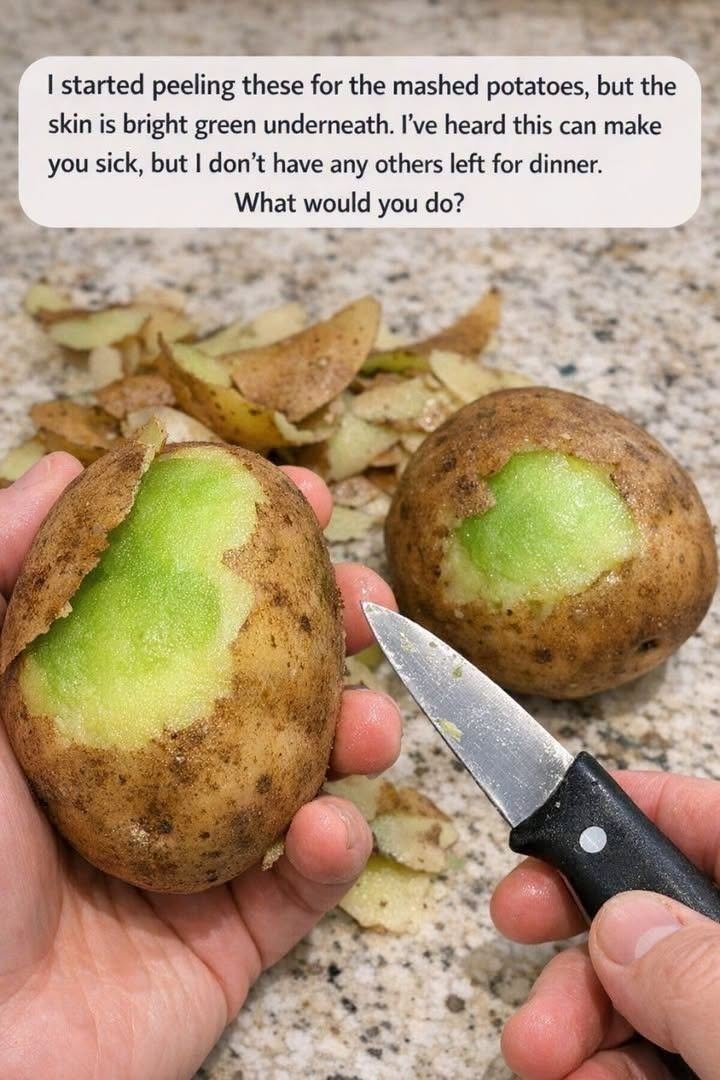
Imagine this: you’re halfway through preparing dinner, and the comforting aroma of a home-cooked meal is just starting to fill your kitchen. You reach for the potatoes, planning to whip up a batch of creamy mashed potatoes to accompany your meal. But as you begin to peel them, you notice the skin beneath is alarmingly green. You’ve heard whispers that eating green potatoes can be harmful, but you find yourself in a dilemma as you have no other options for tonight’s dinner.
So, what’s the real deal with green potatoes? How concerned should you be, and what steps should you take to ensure your meal is both delicious and safe? In this comprehensive guide, we’ll explore everything you need to know about green potatoes, from the science behind their color to practical advice on when it’s safe to eat them and when you should call it quits.
1. First, Stop and Assess: How Green Are These Potatoes?
When you first notice the green tint on your potatoes, it’s essential to assess the extent of the discoloration. Are the potatoes lightly tinged with green, or are they uniformly green throughout? If only a small portion of the potato is green, you may be able to salvage them with some careful trimming. However, if the majority of the potato is green, it’s likely best to err on the side of caution and discard them.
Take note of the intensity of the green hue as well. A pale green color may indicate a lower level of solanine, the compound responsible for the toxicity in green potatoes, whereas a dark, vibrant green could suggest a higher concentration. Generally, if more than a quarter of the potato is covered in green, it’s advisable to discard it entirely.
2. What That Bright Green Color Really Means Chemically
The green color in potatoes is due to chlorophyll, which is harmless in itself. However, its presence is a signal that the potato has been exposed to light, which also encourages the production of solanine. Solanine is a glycoalkaloid poison that can cause nausea, headaches, and neurological symptoms when ingested in significant quantities.
Potatoes naturally produce solanine as a defense mechanism against pests and disease. While all potatoes contain some solanine, the levels significantly increase when they are exposed to light and begin to turn green. Typically, solanine levels above 20 mg per 100 g of potato can cause symptoms of poisoning in humans.
For Complete Cooking STEPS Please Head On Over To Next Page Or Open button (>) and don’t forget to SHARE with your Facebook frien
NEXT PAGE