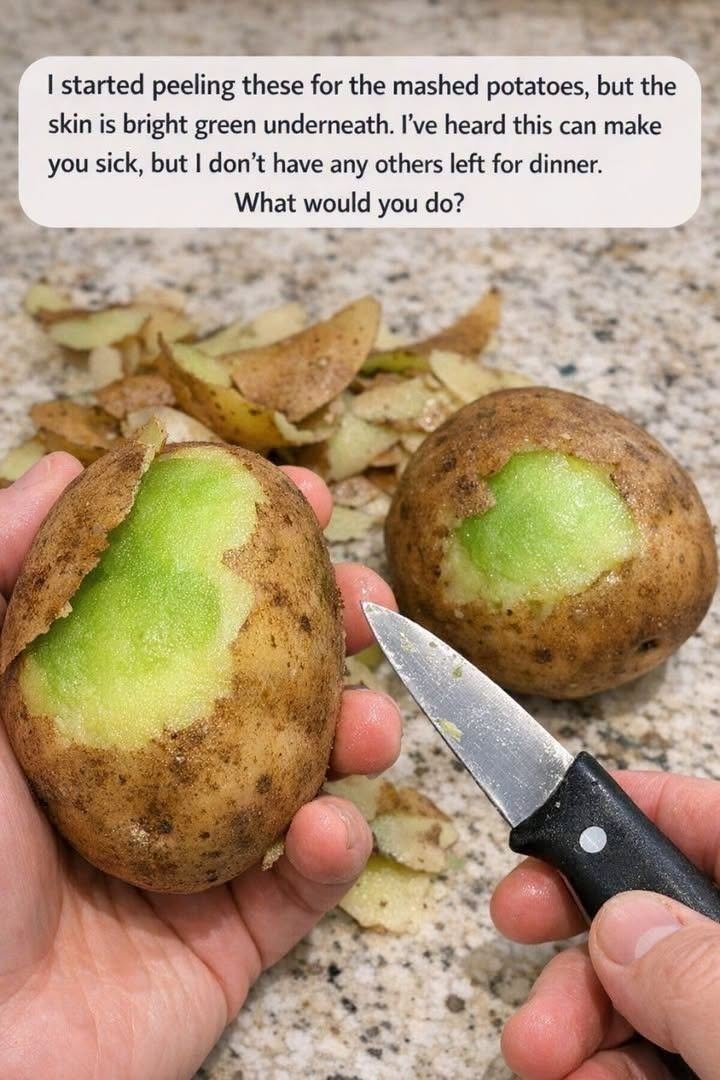
3. The Real Risk: How Much Green Potato Can Make You Sick?
The risk of solanine poisoning depends on the concentration of solanine in the potatoes and the amount consumed. A small amount of green potato might not cause any symptoms, but consuming a large quantity could lead to solanine toxicity.
Symptoms of solanine poisoning can occur with the ingestion of as little as 2 mg per kilogram of body weight. For an average adult, this equates to consuming around 200 mg of solanine, which can be present in approximately 1 kg of heavily greening potatoes. Hence, moderation and careful assessment are key.
4. When It’s Safe To Salvage: Trimming Vs. Tossing
If the potatoes show only minor greening, it may be possible to salvage them by removing the affected areas. Use a sharp knife to cut away the green sections, ensuring you remove at least 1/8 inch below the green surface, as solanine can be present slightly deeper than the visible green.
However, if the potatoes are heavily greened, it’s safer to discard them. Not only is the solanine likely to be more concentrated, but the taste and texture of the potato may also be compromised, making for an unpleasant dining experience.
5. How To Cut Away Green Spots Properly (And How Deep To Go)
To safely remove green spots from potatoes, use a sharp paring knife or a vegetable peeler with a deep blade. Carefully slice away the green areas, ensuring you cut at least 1/8 inch below the surface to remove any potential solanine beneath the visible green.
Examine the potato closely after trimming. If any green remains, continue to cut away the affected areas until you are left with only the white or yellow flesh of the potato. If cutting away the green areas leaves you with little usable potato, it may be best to discard it altogether.
6. Red Flags That Mean You Should Not Eat Them At All
Certain signs should serve as red flags indicating that you should not eat the potatoes, regardless of how much you can trim away. If the potatoes emit a bitter taste or smell, this is a strong indication of high solanine levels.
Additionally, if the potatoes are sprouting, soft, shriveled, or show signs of rot, discard them. These factors can also indicate increased solanine levels and a loss of nutritional quality, making them unsafe for consumption.
7. If You Do Use Them: Cooking Methods That Minimize Risk
Cooking methods that involve high heat, such as baking or frying, can help reduce solanine levels in potatoes. However, it’s important to note that cooking does not entirely eliminate solanine, so trimming is still necessary.
Boiling green potatoes is not recommended, as it may not effectively reduce solanine levels. If you choose to use green potatoes, ensure they are thoroughly trimmed and cooked using a method that applies high heat to minimize risk.
For Complete Cooking STEPS Please Head On Over To Next Page Or Open button (>) and don’t forget to SHARE with your Facebook friends
NEXT PAGE