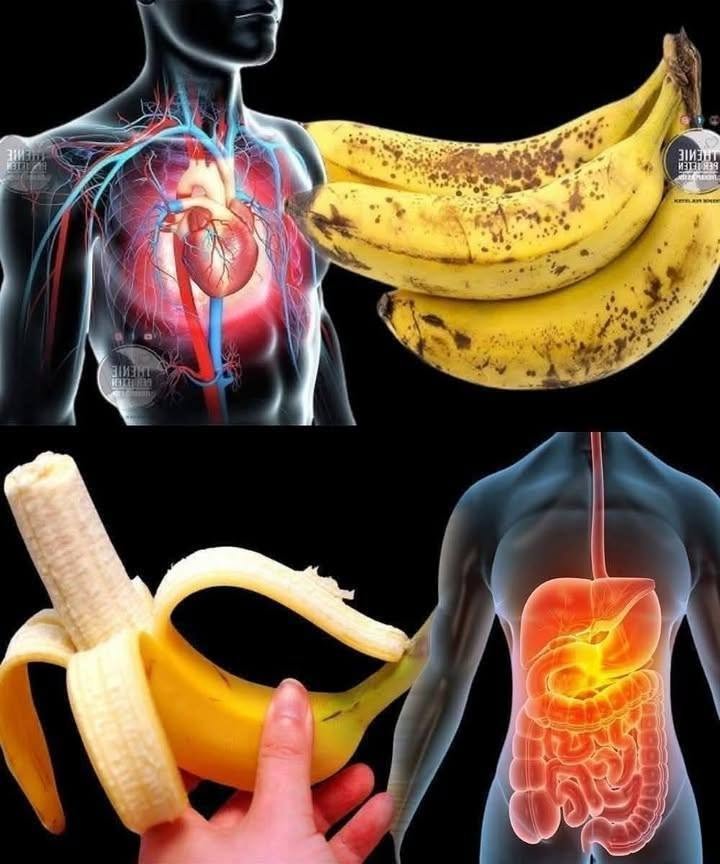
Bananas are famous for their potassium content — and for good reason.
A medium banana provides roughly **400–450 mg of potassium**.
Potassium is an essential mineral and electrolyte involved in several important processes in the body. It helps support normal nerve signals, muscle contractions, fluid balance, and healthy blood pressure.
However, bananas aren’t the only source of potassium. Potatoes, beans, lentils, leafy greens, avocados, yogurt, and many other foods can also provide significant amounts.
## 3. Bananas Can Support Digestive Health
Bananas also provide dietary fiber.
One medium banana contains approximately **3 grams of fiber**.
Fiber contributes to normal digestive function and can help you feel satisfied after eating.
Interestingly, the ripeness of a banana also matters.
Less-ripe bananas contain more **resistant starch**, a carbohydrate that isn’t completely digested in the small intestine. Resistant starch can reach the large intestine, where it may serve as food for beneficial gut microbes.
As bananas ripen, more of this starch is converted into sugars, which explains why ripe bananas taste sweeter.
4. They Contain Several Important Vitamins and Minerals
NEXT PAGE