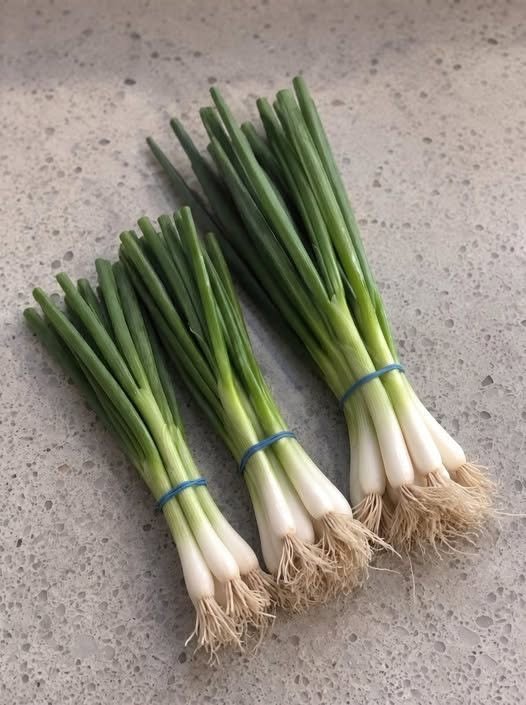
Chives really shine when added toward the end of cooking.
They’re wonderful with:
Baked potatoes
Cream cheese
Sour cream
Eggs
Butter
Creamy soups
Fish
Chicken
Salads
Dips
Fresh cheeses
Because their flavor is delicate, you don’t need much.
A small handful can make a dish look restaurant-worthy with almost zero effort!!
Which One Should You Use?
Here’s my simple rule of thumb.
Want crunch and a mild onion flavor? Choose green onions or scallions.
Want a stronger onion flavor and a small bulb? Choose spring onions.
Want a delicate onion flavor and a pretty finishing touch? Choose chives.
And if a recipe says scallions while your store only has green onions?
Buy the green onions. In most cases, that’s exactly what the recipe means.
Common Mistakes to Avoid
Assuming All Four Are the Same
They aren’t.
Although they belong to the same general onion family, their appearance, texture, flavor, and culinary uses differ.
Replacing Chives in Equal Amounts
Chives are much more delicate than green onions.
A direct one-for-one substitution can change the flavor and texture of your dish.
Throwing Away the Green Tops
Don’t do it!
The green portions of green onions and spring onions are delicious and useful.
Using Only the White Part
Unless your recipe specifically says otherwise, use the green tops too.
They make excellent garnishes and add a fresh flavor at the end of cooking.
Frequently Asked Questions
Are green onions and scallions the same thing?
In many recipes and regions, yes. The terms are often used interchangeably for young onions with slender white bases and long green tops.
Are spring onions and scallions the same?
Not always. Spring onions are commonly distinguished by having a more developed, rounded bulb, while scallions typically have little or no bulb. However, naming varies by region.
Are chives baby green onions?
No. Chives are a separate herb. They have thin, hollow leaves and a much more delicate onion flavor.
Can I use chives instead of scallions?
You can, especially as a garnish, but they won’t provide the same texture or intensity. Use them when you mainly want a light onion flavor.
Can I eat the green part of spring onions?
Yes! The green tops are edible and can be used much like scallion greens.
Which has the strongest flavor?
Generally, spring onions with a well-developed bulb will have a stronger onion flavor than chives, while green onions and scallions fall somewhere in between depending on freshness and maturity.
Why do recipes call them scallions instead of green onions?
It’s largely a matter of regional terminology and culinary tradition. Many recipes use the names interchangeably.
Are all of these members of the onion family?
They belong to the broader allium group, but they are not the same plant. Green onions/scallions and spring onions are young onions, while chives are a distinct herb.
General Information
Green onions/scallions: Mild young onions with edible white and green portions.
Spring onions: Young onions with a more developed bulb and generally stronger onion flavor.
Chives: A delicate herb with thin, hollow green leaves and a mild onion taste.
Best everyday substitute: Green onions and scallions are usually interchangeable.
Best garnish: Chives or thinly sliced scallion greens.
Best for cooking: Green onions and spring onions.
Best for delicate flavor: Chives.
Conclusion
Continue reading on the next page →