Don’t Use Vinegar and Baking Soda Together for the Main Job
You’ll often see advice recommending vinegar and baking soda as a powerful cleaning combination.
When mixed, however, they react with each other and produce carbon dioxide bubbles. The fizz may look impressive, but the two substances largely neutralize one another.
For greasy stove surfaces, dish soap is generally more useful for cutting grease, while baking soda can provide gentle scrubbing power.
If you use vinegar for a particular cleaning task, use it appropriately and never mix cleaning products indiscriminately.
Avoid These Common Mistakes
Don’t clean a hot stovetop. You can burn yourself, and sudden temperature changes may damage certain surfaces.
Don’t pour large amounts of water directly onto the stove.
Don’t use steel wool or very abrasive pads on surfaces that can scratch.
And never mix household cleaning products containing bleach with acids such as vinegar or other cleaners.
One More Important Safety Step
Before cleaning, make sure the burners are off and completely cool.
If you smell gas, don’t attempt to clean or troubleshoot the stove. Turn off the gas supply if it is safe to do so, avoid flames and electrical sparks, and follow your local gas supplier’s emergency guidance.
The Bottom Line
You don’t need an elaborate cleaning formula to tackle most everyday stove grease.
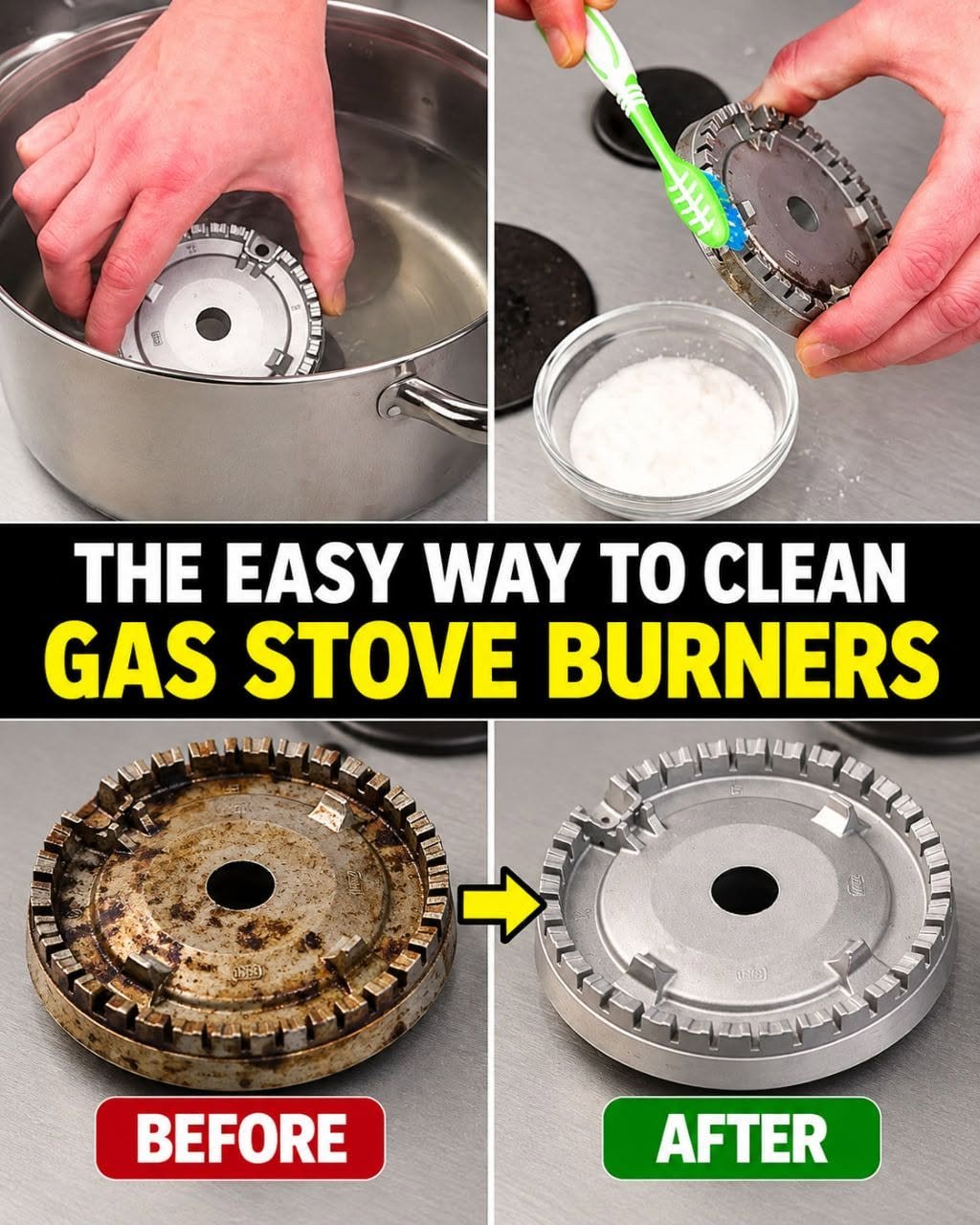
Dish soap + baking soda can make a simple and inexpensive cleaning combination:
- Dish soap helps break down grease.
- Baking soda helps loosen stubborn residue.
- Warm water and soaking do much of the heavy lifting.
The biggest secret isn’t scrubbing harder.
Let the grime soften first, use the right cleaner for the type of mess, and clean small spills before they turn into baked-on buildup.