ADVERTISEMENT
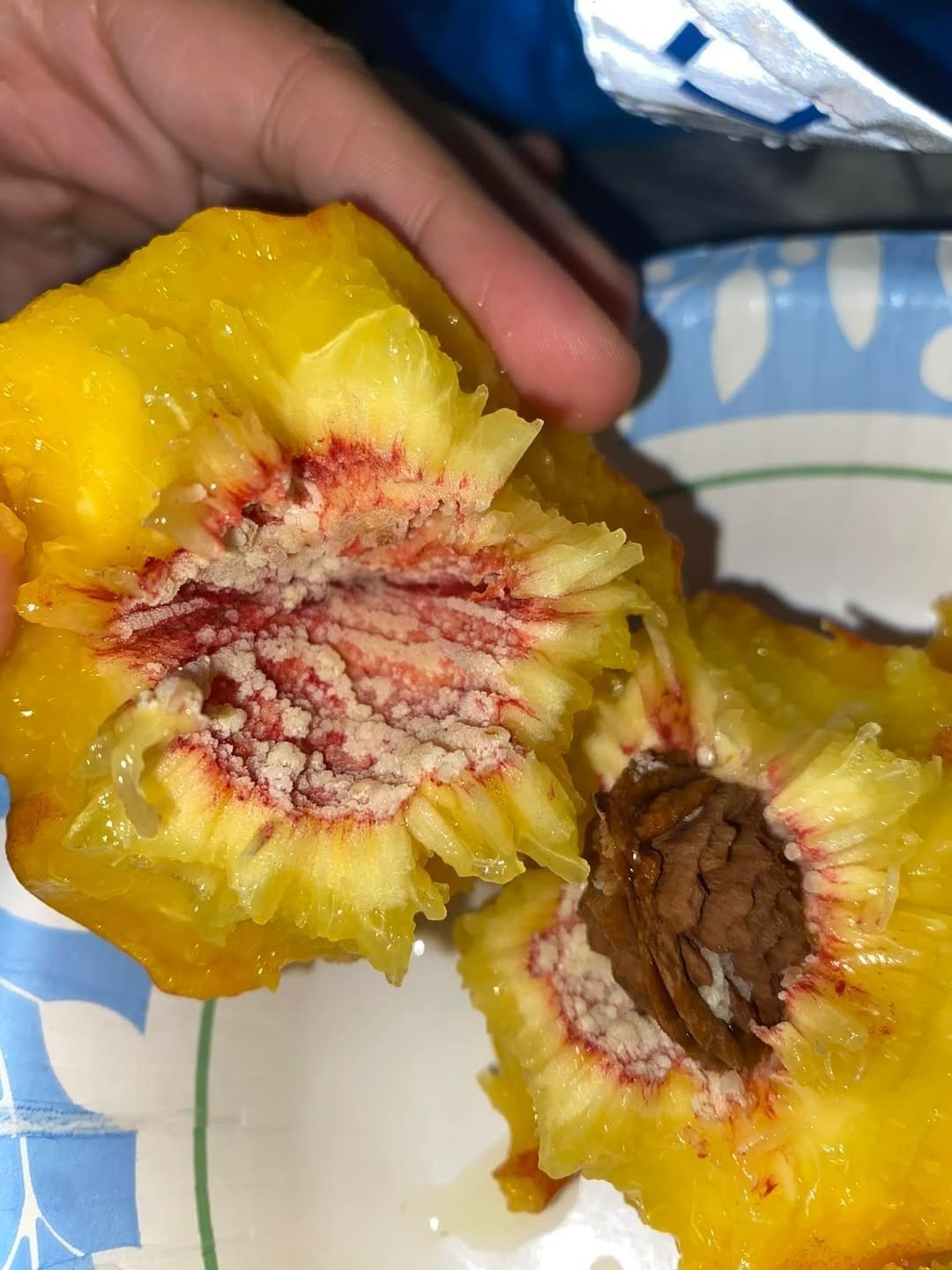
Not every peach shows this white fluff—and that’s perfectly normal. Its presence depends on:
Peach variety: Some cultivars (like ‘Red Haven’ or ‘Elberta’) are more prone to callus formation
Ripeness: Tree-ripened peaches are more likely to develop it than those picked green and gassed to ripen
Growing conditions: Warm days, cool nights, and proper hydration encourage natural cell development
Genetics: Just like freckles in humans, some peaches are simply “born” with it
Good news: Callus tissue is more common in organic or locally grown peaches—a sign of minimal intervention and natural maturation!
Mold vs. Callus Tissue: How to Tell the Difference
Yes, mold can grow on peaches—but it looks and behaves very differently than callus tissue.
FEATURE
PEACH CALLUS TISSUE
MOLD
Color
Bright white, sometimes slightly creamy
Fuzzy green, black, gray, or blue
Texture
Smooth, cottony, firmly attached to the pit
Fluffy, powdery, spreads to flesh
Smell
None—peach still smells sweet and fresh
Sour, musty, or fermented odor
Location
Only on the pit surface, never on the fruit flesh
On skin or flesh, often near bruises or soft spots
If you see mold on the peach flesh—discard the entire fruit. Callus tissue, however, is only on the pit and doesn’t spread.
Is It Safe to Eat? What Should You Do?
Yes, it’s safe—callus tissue is non-toxic and poses no health risk.
You don’t need to remove it—just eat around the pit as usual.
Never eat the peach pit itself—it contains amygdalin, which can convert to cyanide when crushed or chewed.
Pro tip: If you’re canning, freezing, or making peach jam, simply rinse the pit under water if the tissue bothers you—it wipes off easily!
Bonus: Can You Grow a Peach Tree from a Pit with Callus Tissue?
Many gardeners believe callus tissue means the pit is “ready to sprout”—and they’re partly right!
While callus alone won’t grow a tree, it can indicate a viable seed. If you’d like to try:
Clean and dry the pit thoroughly
Cold-stratify it in the fridge for 8–12 weeks (mimicking winter)
Plant in potting soil and be patient—it can take months to sprout!
Note: Store-bought peaches are often hybrid varieties—your tree may not produce the same fruit, but it’ll still be a beautiful ornamental!
Final Thought: Nature’s Little Quirk, Not a Flaw
That white fluff isn’t a defect—it’s a tiny testament to the peach’s living biology.
In a world of sterile, uniform produce, seeing callus tissue is actually a quiet celebration of nature’s complexity.
So next time you spot it, smile.
You’re not just eating a peach.
You’re witnessing life in action.
The best peaches aren’t perfect—they’re alive.
Found this reassuring?
Save this guide for your next farmers market haul
Share it with a fellow fruit lover or home gardener
Comment below: Have you seen callus tissue before? What did you think it was?
Disclaimer: While peach callus tissue is harmless, always discard fruit with mold on the flesh, foul odor, or excessive softness. Peach pits should never be consumed due to cyanide-containing compounds.
ADVERTISEMENT
See next page: