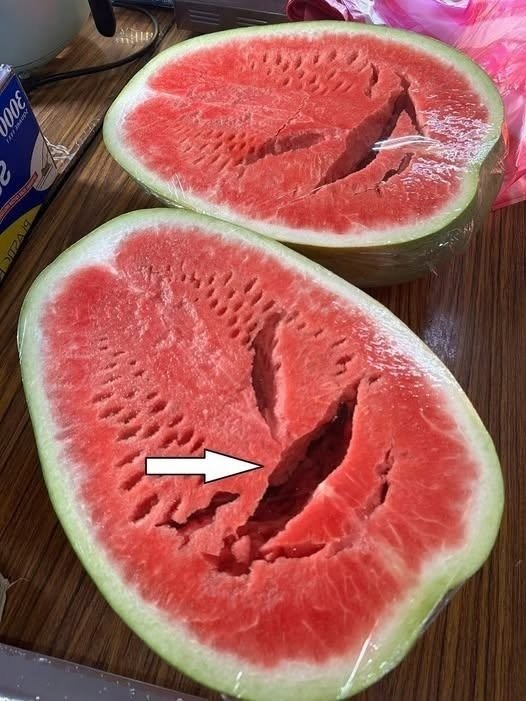
Foaming or Bubbling
Foam coming from the watermelon is a major warning sign.
Watermelon contains natural sugars, and yeast or bacteria can begin fermenting them. As microorganisms produce gas, pressure can build inside the fruit and cause bubbling or foaming liquid.
Sour or Alcohol-Like Odor
Fresh watermelon should smell mild and sweet.
A sour, fermented, or alcohol-like smell suggests that microorganisms have begun breaking down the fruit.
Slimy Flesh
Fresh watermelon should be crisp and juicy.
A slippery or slimy surface is a strong reason to discard it.
Extremely Mushy Texture
Softening can happen with overripeness, but flesh that is collapsing, watery, or unusually mushy may indicate spoilage.
Leaking or Swollen Rind
A watermelon that is leaking, unusually swollen, cracked externally, or under visible pressure should be handled cautiously and discarded.
Why Foaming Watermelon Can Be Dangerous
Fermentation itself can make the fruit unpleasant, but the bigger problem is that obvious spoilage means microorganisms have been growing inside it.
You cannot tell by appearance alone exactly which organisms are present.
That is why a watermelon that is bubbling, foaming, leaking, or smells fermented should be thrown away rather than tasted.
Don’t Rely on a Taste Test if It Looks Spoiled
If a watermelon already shows obvious spoilage, do not taste a piece just to “check.”
Food can contain harmful microorganisms without tasting dramatically different.
When in doubt, throwing away one watermelon is much safer than risking foodborne illness.
How to Choose a Better Watermelon
NEXT PAGE